Hotline: +84 901 958 318
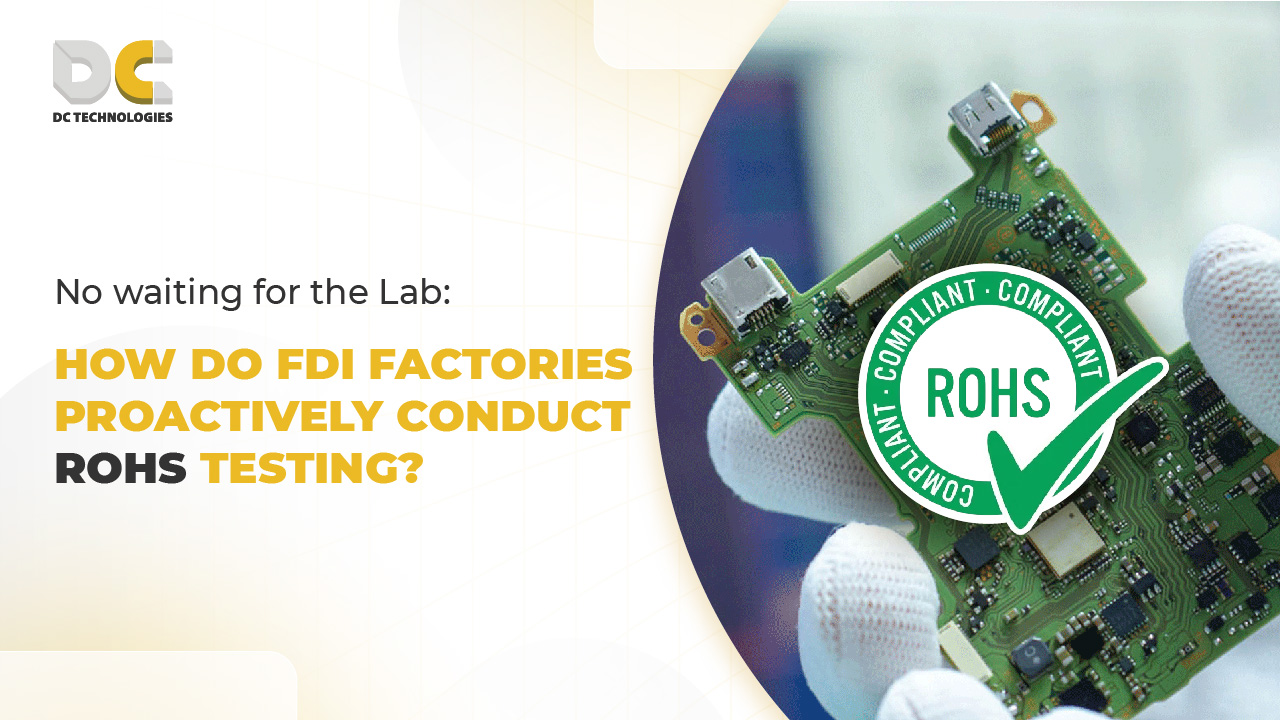
For FDI enterprises in electronics, components, plastics, cables, or industrial equipment manufacturing, controlling hazardous substances in accordance with RoHS standards is an important part of the QA/QC process. This is not only a technical requirement but also directly affects production timelines, the ability to meet customer standards, and the company’s reputation within the supply chain.
During its work with an FDI factory in Vietnam, DC Tech identified a very practical challenge: the company needed to conduct RoHS testing frequently on incoming raw materials, but if it relied entirely on external laboratories, the quality control process would take more time and lack proactiveness.
To protect customer confidentiality, the company name is not disclosed in this article. However, the case below clearly shows how an FDI factory can optimize its RoHS testing process by adding a RoHS analyzer to its internal QA/QC operations.
Before using an on-site RoHS analyzer, the company mainly sent samples to external laboratories when it needed to test for hazardous substances. This approach is still suitable in cases where official results or in-depth analysis are required.
However, in day-to-day operations, the factory faced several difficulties:
Given the nature of FDI manufacturing, response speed and internal data traceability are critical. Therefore, the company needed a solution that would help QA/QC become more proactive during the initial testing stage.

After evaluating its actual needs, the company decided to integrate a RoHS analyzer using XRF technology into its internal testing process. The purpose of the equipment was not to completely replace external laboratories, but to support the factory in rapidly screening material samples before deciding on the next handling step.
The RoHS analyzer was applied in cases such as:
Businesses can refer to the article Can a RoHS Analyzer Replace a Laboratory? to better understand the role of RoHS analyzers in factory operations.
After receiving consultation, installation, and operation guidance, the RoHS analyzer was integrated into the QA/QC process in a simple, practical way that suited internal testing activities.
| Step | Activities | Objective |
| 1 | Receive samples from the warehouse, purchasing, or production department | Identify samples that need to be tested |
| 2 | Prepare samples according to the operating instructions | Ensure suitable measurement conditions |
| 3 | Conduct rapid testing with the RoHS analyzer | Screen for controlled elements |
| 4 | Evaluate results on the software | Classify samples as passed, suspicious, or requiring further testing |
| 5 | Store internal data | Support traceability and quality management |
| 6 | Send samples to a laboratory when in-depth confirmation is needed | Combine on-site testing with external verification |

After putting the RoHS analyzer into operation, the company recorded a more proactive QA/QC process, especially in the inspection of incoming raw materials.
Instead of waiting for external results for every sample, the QA/QC team could conduct rapid on-site testing and provide an initial assessment. This helped the purchasing and production departments receive information earlier when handling incoming materials.
External laboratories were still used when official results or in-depth analysis were required. However, for samples requiring quick checks, the RoHS analyzer helped the company screen them first, allowing only the cases that truly required further confirmation to be sent to the lab.
When testing data was stored, the company gained an additional basis for monitoring material quality by batch or by supplier. This is especially important for FDI enterprises with clear data traceability requirements.
The RoHS analyzer helped detect early signs of abnormal samples. As a result, the factory could hold, recheck, or work with suppliers before materials were introduced into the production line.
From this real implementation case, several important lessons can be drawn:
For FDI enterprises, data storage and traceability support should be carefully considered during implementation.
Businesses should consider investing in a RoHS analyzer if they are facing the following situations:
| Situation | Reason to Consider |
| Testing many samples every week or every month | Rapid screening at the factory is needed |
| Working with multiple suppliers | Better incoming quality control is required |
| Manufacturing for international customers | Reduce waiting time for external test results |
| QA/QC needs faster response | Giảm thời gian chờ kết quả bên ngoài |
| Internal testing data needs to be stored | Support traceability and quality management |
Businesses can refer to the RoHS Analyzer – SpectraX XRF product category to explore suitable equipment options for QA/QC laboratories.
DC Tech provides RoHS analyzer solutions using XRF technology, suitable for rapid testing needs in factories, especially for businesses that need to control incoming raw materials and support QA/QC data traceability.
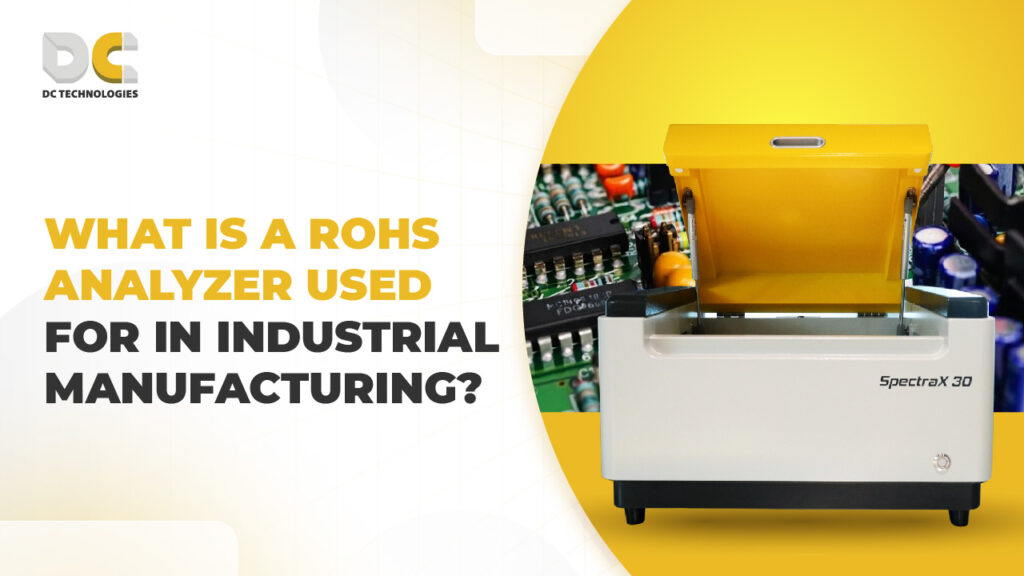
Businesses can refer to the SpectraX 30, a benchtop XRF analyzer introduced for analyzing hazardous elements according to RoHS/WEEE/ELV/TCVN standards across various fields such as electronics, toys, jewelry, and industrial products.
>> Read more: Benchtop XRF Analyzer for RoHS Standard Analysis – SpectraX 30
For more information about the RoHS standard, businesses can also refer to the official European Commission page: RoHS Directive – European Commission.

Implementing a RoHS analyzer at the factory helps FDI enterprises become more proactive in quality control, especially in incoming material inspection and risk sample screening.
A RoHS analyzer does not completely replace external laboratories, but it is a useful tool that enables QA/QC teams to conduct rapid testing, store internal data, and detect potential non-compliance risks before materials enter production.
If your business is looking to purchase a cost-effective RoHS analyzer for frequent RoHS testing or wants to optimize its QA/QC process, contact DC Tech for suitable solution consultation.
Hotline: +84 901 958 318
Fanpage: https://www.facebook.com/dctech.com.vn
Website: https://dctech.online/