Hotline: +84 902 588 891
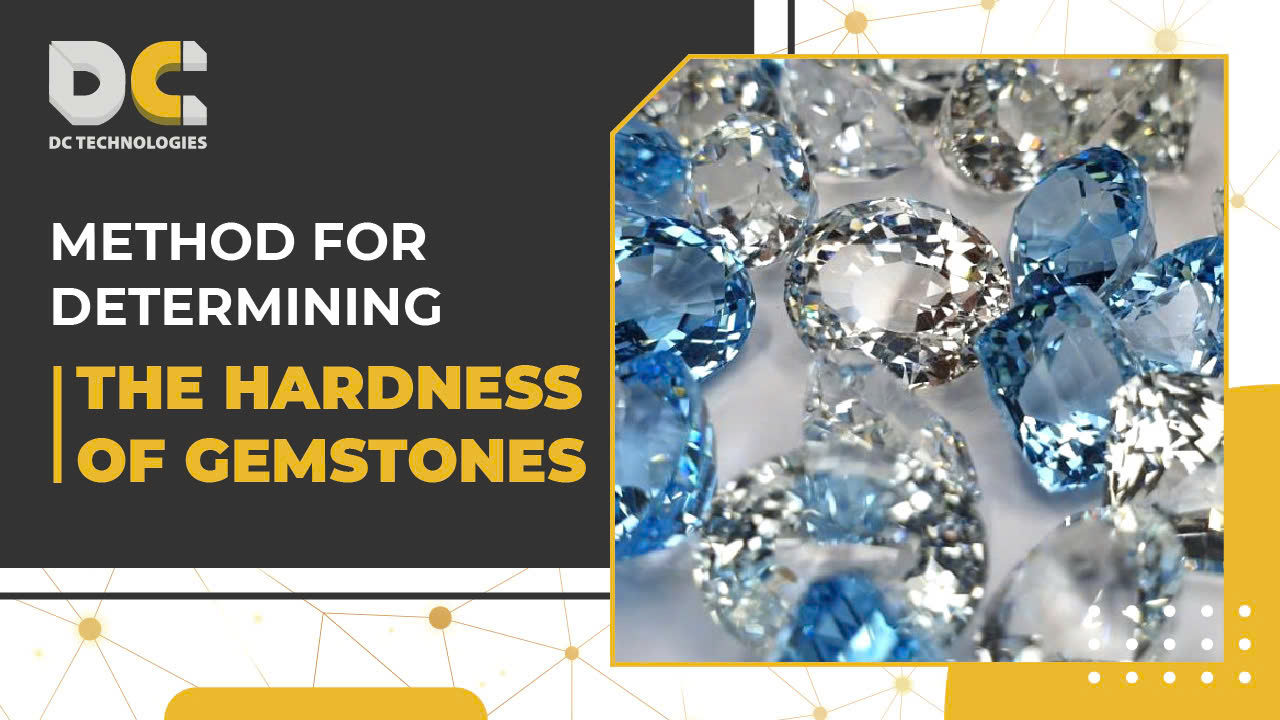
Diamonds, with their dazzling beauty and almost absolute durability, have long been seen as symbols of eternity and perfection. But have you ever wondered how scientists and jewelers can accurately determine the extraordinary hardness of a diamond? To understand this better, let’s explore the Mohs scale of hardness and the methods used to determine the hardness of gemstones.
The Mohs scale of hardness, invented in 1812 by German mineralogist Friedrich Mohs, is a tool for measuring the hardness of minerals. This scale stands out for its simplicity and effectiveness, as it does not require complex scientific tools, relying instead on a simple comparison method.
The principle of the scale is rated from 1 to 10, based on the ability of one mineral to “scratch” another. A mineral with a higher Mohs hardness value will be able to scratch a mineral with a lower value, while a mineral with a lower value cannot scratch a mineral with a higher value.
| Hardness | Mineral | Scratch Ability | Application |
| 1 | Talc | Very soft, will be scratched by a fingernail | Commonly used in baby powder and some cosmetics. |
| 2 | Plaster | Will be scratched by a fingernail | Widely used in construction, dentistry, and art. |
| 3 | Calcite | Easily scratched by hard objects like coins | Used extensively in industrial production, especially construction materials. |
| 4 | Fluorite | Scratched by nails or screws | Commonly used in metallurgy, ceramics, and special jewelry. |
| 5 | Apatite | Scratched by nails or metals | Used in jewelry production, glassmaking, and ceramics. |
| 6 | Feldspar | Scratched by metals like steel or copper | Used in producing tiles, ceramics, and glass. |
| 7 | Quartz | Can scratch window glass | Applied in paint industry, filtration, crafts, and many other production sectors like electronics, ceramics, and glass. |
| 8 | Topaz | Can scratch tempered glass | Widely used in jewelry production. |
| 9 | Corundum | Can scratch the gemstones above | Widely used in jewelry production. |
| 10 | Diamond | Only diamond can scratch diamond | A precious gemstone highly sought after in jewelry production. |
Durability: In the jewelry industry, durability is the top factor when choosing materials for jewelry production. Gemstones used in rings and bracelets are constantly exposed to abrasion and scratching on a daily basis. Therefore, by using the Mohs scale of hardness, jewelers can select suitable materials to ensure that the gemstones can withstand everyday wear without losing their luster or quickly deteriorating.
Scratch Resistance: The higher the Mohs hardness of a gemstone, the better its resistance to scratching and abrasion. With a Mohs hardness of 10, diamonds are not only famous for their beauty but also as a symbol of durability. This is why diamonds are always preferred in the production of high-end jewelry.
Care and Maintenance: Understanding the Mohs hardness of gemstones helps us know how to care for and store them properly. Softer stones, such as pearls and opals, need special handling and storage to avoid scratches and surface damage. Additionally, when cleaning jewelry, knowing the hardness of gemstones helps avoid using abrasive cleaning agents or methods that may cause harm.
Design Considerations: Jewelry designers often consider the Mohs scale of hardness when creating pieces. Combining gemstones with similar hardness levels helps reduce the risk of one stone scratching another. Moreover, using different hardness levels can create unique aesthetic effects, but it is important to carefully consider the durability of the design.
Gemstone Identification: The Mohs scale also aids in identifying gemstones. By conducting simple scratch tests with known materials, such as a fingernail (2.5) or a steel knife (5.5), jewelers can roughly determine the hardness of a gemstone and thus narrow down its identity.
Basic Method: Rubbing the Surface of the Gemstones
Step 1: Prepare the Sample:
Prepare a rough gemstone, ensuring that the surface of the stone is clean and not previously scratched.
Use the gemstone set corresponding to each level on the Mohs hardness scale.
A magnifying glass (if available) to observe more clearly.
Note: This method should not be used on jewelry or gemstones that have been cut and polished.
Step 2: Conduct the Test:
Secure the specimen that needs to be tested on a flat surface.
Gradually rub gemstones with increasing hardness from low to high, gently applying moderate pressure on the surface of the specimen being tested.
Step 3: Observe the Results:
Examine the surface of the specimen after the test. Use your hand to brush off any mineral dust or powder generated during the test.
Use a magnifying glass (if available) for a clearer view.
Conduct a second test to confirm the results.
Modern Method: Using a Gemstone Hardness Tester Pen
With this method, you simply use a gemstone hardness tester pen and place the pen’s tip at a 90-degree angle to the surface of the gemstone.
This is an accurate test method and does not affect the gemstone.