Hotline: +84 902 588 891
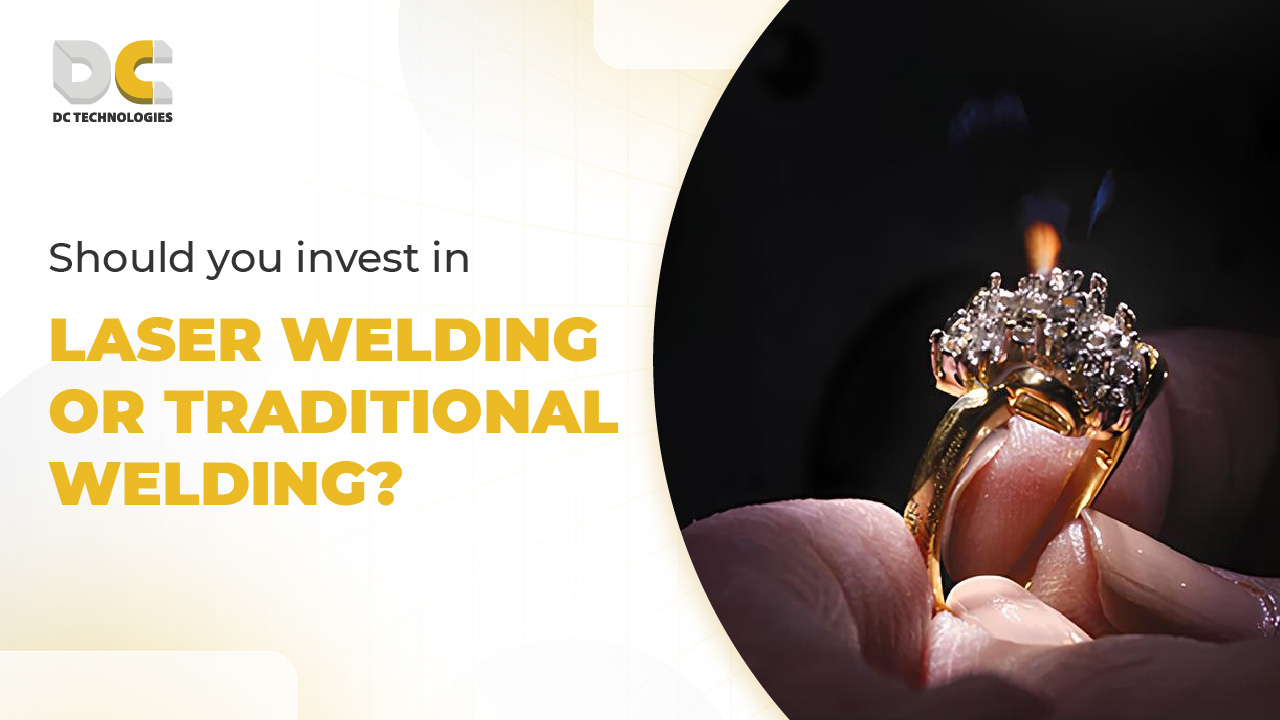
Choosing between modern laser welding and traditional welding is a challenging decision regarding both cost and performance. With over 25 years of market leadership, DC will help you analyze the core differences ranging from the precision of laser technology to the economic advantages of conventional methods to find the most optimal solution for your production facility.
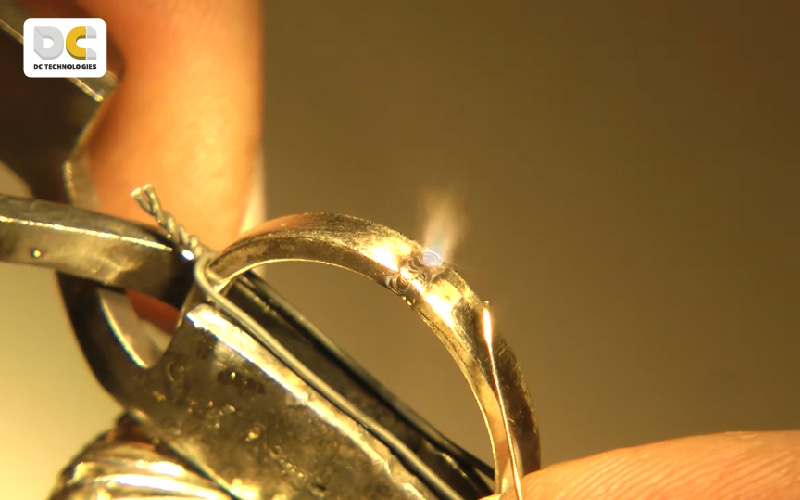
Laser welding is a joining process that utilizes an amplified laser beam, focused at a high energy density, as the primary heat source. When this beam impinges on the material’s surface, the light energy is instantaneously converted into intense thermal energy. This process melts the metal at a precise, microscopic focal point (often just a few millimeters) to create deep, accurate fusion bonds through a completely non-contact method.
>> See more: What is laser welding technology?
Laser welding technology delivers superior efficiency by simultaneously optimizing speed, quality, and operating costs through the following characteristics:
– Ultra-fast welding speed: The welding process occurs extremely rapidly due to high energy density, significantly minimizing product fabrication time.
– Reduced consumables: This technology minimizes the need for filler materials (such as welding wires or rods), thereby optimizing input costs.
– Ease of operation and automation: The equipment features high automation capabilities and an intuitive interface, allowing operators to easily adopt and use the system without requiring complex manual skills.
– Impeccable aesthetic quality: The resulting weld seams are smooth, bright, and highly precise, ensuring the product’s aesthetic appeal immediately after welding.
– Preservation of material integrity: Due to the minimal Heat Affected Zone (HAZ), the base material retains its original shape, significantly minimizing distortion, warping, or discoloration.

Depending on the shielding mechanism and filler material, this group of methods is classified into three primary forms:
Traditional welding is an umbrella term encompassing the most classic and foundational metal joining technologies in the mechanical industry. It operates primarily on the principle of using thermal energy from an electric arc to melt materials.
– Manual Arc welding: Uses flux-coated electrodes; distinguished by low cost, high mobility, and flexible operation across various positions.
– MIG/MAG welding: Uses continuously fed wire in a shielding gas environment; an optimal solution for high welding speeds and high industrial productivity.
– TIG welding: Uses a non-consumable Tungsten electrode in an inert gas atmosphere; specialized for welds requiring high purity, precision, and aesthetic quality on thin-gauge materials or special alloys.
Traditional welding remains the “backbone” of the heavy industry and construction sectors, thanks to its robust technical characteristics and high adaptability.
The prominent technical advantages of this method include:
– Specialized for thick and heavy steel structures: This method is effective for welding heavy-gauge materials (such as chassis and structural steel over 5mm) due to its deep penetration capabilities and ability to withstand high loads, ensuring structural integrity for construction projects.
– Operability in harsh environments: Traditional welding machines and processes (especially Stick welding) are designed to be rugged and durable. They function effectively outdoors, at heights, or in windy and dusty conditions without risk of equipment failure.
– Handling of rusted and poorly prepared materials: This method does not require pristine workpieces (base metals). It performs well on rusted, greasy, or painted steel (common in repair and renovation work) thanks to the self-cleaning mechanism of the arc and flux.
– Low initial investment cost: The cost to acquire traditional welding equipment is very affordable, making it suitable for small workshops, maintenance repairers, or tasks not requiring high-volume production pressure.
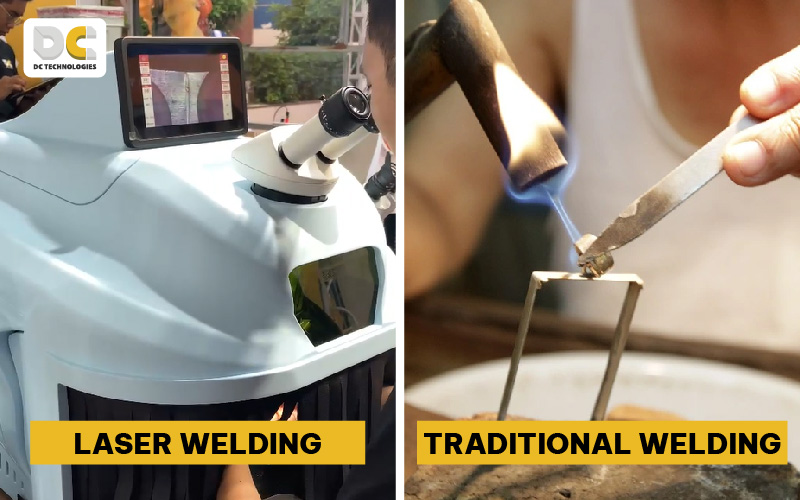
| Laser welding | Traditional welding | |
| Flexibility & material thickness | Specialized for thin-gauge, small, and intricate components. | Suitable for heavy-gauge materials and large-scale structures. |
| Heat affected zone (HAZ) Control | Localized heat input; ensures absolute material integrity. | Extensive / Wide heat affected zone. |
| Weld quality & aesthetics | Perfect, refined, and consistent. The weld seam is smooth, bright, and free of discoloration. | Often leaves visible processing marks. The weld bead is typically bulky, containing scales, black oxidation. |
| Filler materials | Autogenous welding (preserves original material quality). | Dependent on filler materials. |
| Post-weld processing | Requires only light polishing due to the clean and precise weld. This minimizes the loss of precious metals (such as gold and silver) caused by grinding. | Requires multiple steps: slag removal, grinding, and deep polishing to eliminate weld marks. This process removes a significant amount of the base material. |
| Speed & productivity | Weld formation time is measured in milliseconds. It allows for immediate repairs and joining without cumbersome preparation procedures. | Requires time for heating materials, preparing flux, and waiting for the material to cool down after processing. |
| Safety & environment | No fumes or toxic chemicals. Precise operation via a microscope or monitor protects the operator from direct exposure to the heat source. | Operators face close exposure to open flames or arcs, welding fumes, and cleaning chemicals, posing long-term health risks. |
>> See more: Factors affecting the price of laser welding machines today
Choosing laser welding is the optimal investment decision if your business operates in sectors demanding absolute precision and aesthetics, such as jewelry manufacturing, dentistry, or thin-gauge sheet metal fabrication (stainless steel, interior decor, and equipment enclosures). This technology comprehensively addresses surface quality challenges: it produces pristine welds, eliminates thermal distortion, preserves the integrity of precious materials (such as gold and gemstones), and significantly boosts production speed by minimizing post-weld grinding and polishing processes.
>>See more: Applications of laser welding machines in jewelry making
>>See more: Laser welding machine for high-precision manufacturing
Conversely, traditional welding (TIG/MIG/Stick) remains the most suitable solution for heavy industries, structural steel construction, or mobile outdoor repairs. If your needs focus on load-bearing capacity for heavy-gauge materials, the need to fill large gaps, or a limited initial budget, then the durability, low cost, and rugged reliability of traditional methods remain an irreplaceable choice.
DC Technologies proudly asserts itself as a reputable provider of high-quality laser welding equipment, with a specific focus on specialized laser welding series for the jewelry and crafting industry.
Understanding the stringent demands of the jewelry trade, our flagship products are carefully selected with stable laser sources and micro-level precision. This enables jewelers to perfectly handle tasks ranging from welding stone prongs and joining delicate chains to performing complex repairs that traditional torch soldering cannot achieve.
To ensure the best experience, we also offer free demonstration services before purchase, allowing customers to verify weld quality before making an investment decision.
The transition from manual welding methods to laser technology is not merely a change in equipment but an inevitable step to elevate a business’s competitive position in the new era.
Especially for the jewelry industry, laser welding acts as a powerful tool to optimize profits by minimizing the loss of precious materials (gold, silver), ensuring the safety of gemstones, and drastically reducing product finishing time.
On this journey, DC Technologies is committed to accompanying your business in technological transformation and elevating your competitive standing in the new era.
References: