Hotline: +84 902 588 891
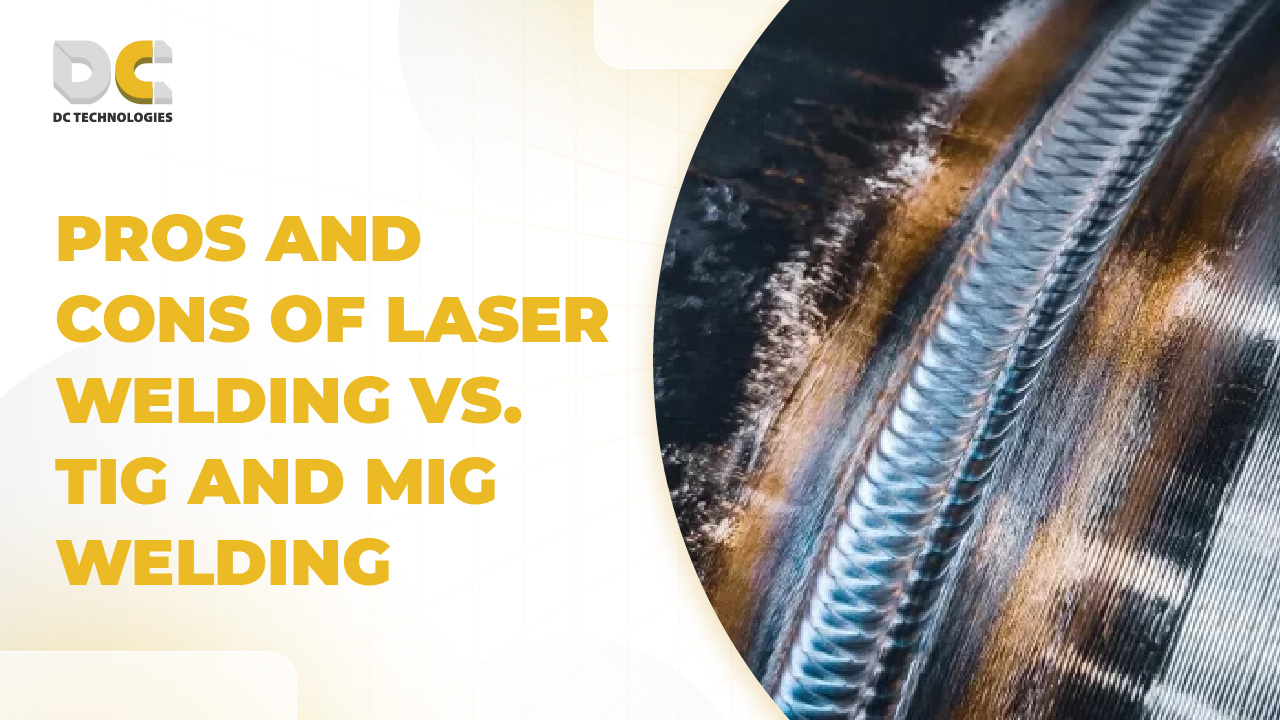
The rapid development of modern welding technologies has raised the question of choosing between laser welding and traditional methods such as TIG and MIG. In this article, DC will help you clearly understand the advantages and disadvantages of each technology to make the most optimal investment decision.
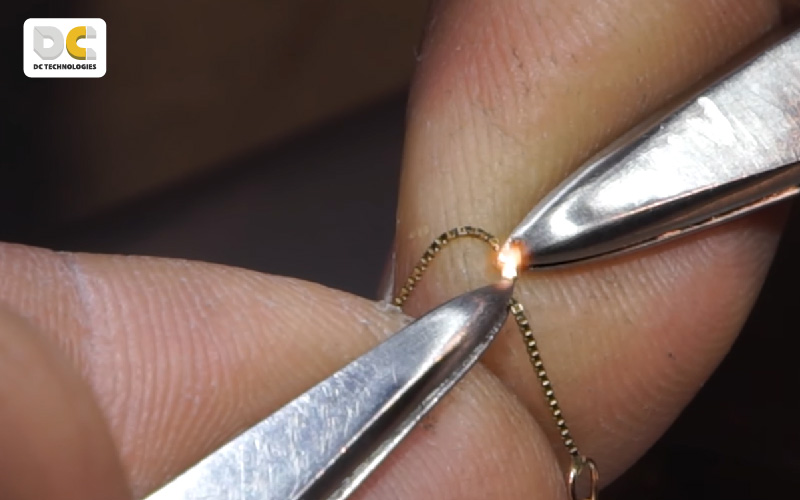
Laser welding is a process that utilizes a high-energy laser beam to melt materials and join them together. This technology creates a highly concentrated and precise heat source, resulting in extremely fast welding speeds. Common laser sources today include Fiber, CO2, and Nd:YAG.
The laser beam generates high-intensity light at a single point. This heat source provides deeper penetration and superior weld quality. Consequently, laser technology is gradually replacing traditional methods. However, many businesses still consider the initial investment cost when choosing laser welding machines.
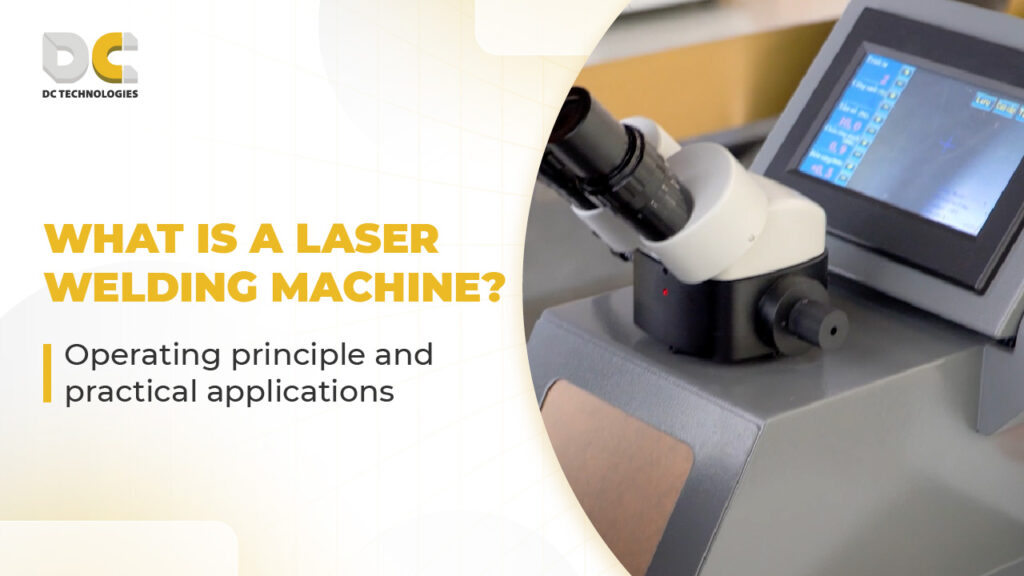
>> See more: What is laser welding machine? Principles and applications
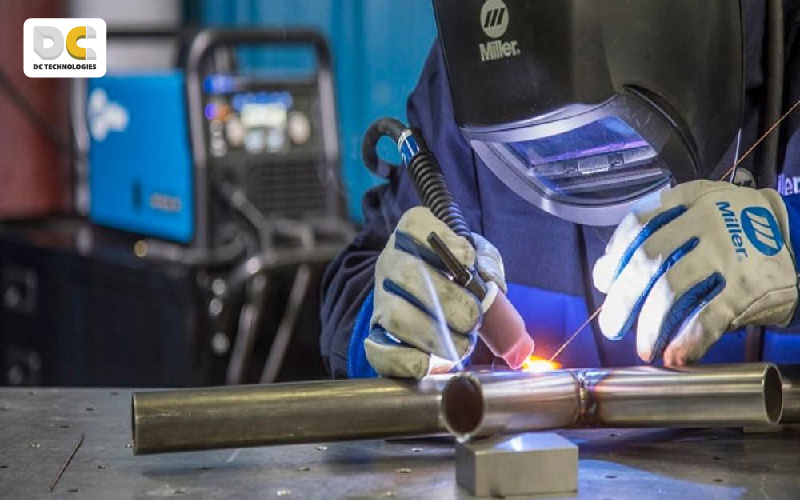
Tig welding is an arc welding technique using a non-consumable tungsten electrode. The process takes place in an inert shielding gas environment. Argon gas helps prevent oxidation from the ambient air. Therefore, this method is also commonly referred to as argon welding.
Tig welding uses ac or dc current depending on the material. This technique is typically used for stainless steel, aluminum, and copper. It is particularly suitable for applications requiring high aesthetic standards.
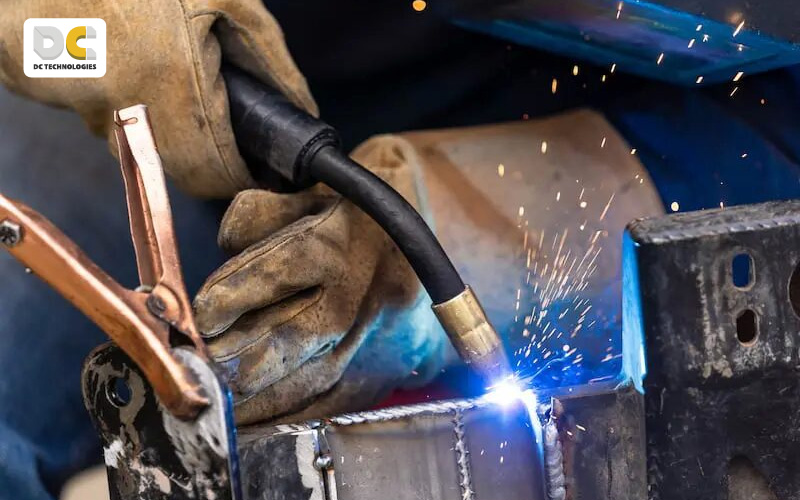
Mig welding uses heat from an electric arc between a consumable wire electrode and the workpiece. The welding wire is continuously fed by an automatic wire feeder. The weld pool is protected by an inert or active shielding gas. This method is also known as wire welding or CO2 welding.
In industrial applications, mig welding offers higher productivity than tig welding. Shielding gases like argon help the weld avoid oxidation. This is a popular solution for mechanical workshops today.
| Criteria | Laser welding machine | Tig welding machine | Mig welding machine |
| Welding speed | Very fast (3-10x faster than tig/mig). optimizes productivity. | Slow. heavily dependent on the welder’s skill. | Moderate to fast. faster than tig but slower than laser. |
| Material thickness | Best for 0.5mm – 4mm (thicker possible with high power). | Suitable for thin to medium materials. | Absolute advantage for thick and very thick materials. |
| Weld quality | Ultra-smooth, uniform, no porosity. usually requires no post-grinding. | Beautiful, high aesthetic appeal, best penetration. | Potential for spatter, weld bead is rougher. |
| Thermal distortion | Extremely low. minimal heat affected zone (haz) | High. prone to warping or shrinking on thin materials. | Moderate. easy to distort if current is not controlled. |
| Operational difficulty | Easy. 1-2 days of training for beautiful results. | Very difficult. requires high-level skill and hand-eye coordination. | Moderate. easier to learn than tig but harder than laser. |
| Post-welding treatment | Integrated cleaning mode; almost no refinishing required. | Requires polishing or pickling for stainless steel welds. | Requires grinding to remove spatter and slag, which is labor-intensive. |
| Fit-up tolerance | Strict requirements. gaps must be minimal (<0.2mm). | Can use filler rods to bridge moderate gaps. | Best. excellent capability for filling large gaps. |
| Vật tư tiêu hao | Protective windows, nozzles (very low consumption if used correctly). | Tungsten electrodes, argon gas, filler rods. | Welding wire, nozzles, shielding gas (CO2 or Argon). |
| Operating cost | Low (saves electricity, labor, and refinishing time). | High (high cost for skilled labor, slow speed). | Moderate (cost of consumables and post-weld grinding). |
Laser welding is a breakthrough choice if the business prioritizes processing speed and surface quality. With speeds many times faster than tig/mig and the ability to create ultra-smooth welds, this technology almost entirely eliminates the grinding and polishing stage, significantly shortening the production cycle.
Laser welding machines help businesses escape dependence on highly skilled welders. Easy operation allows the use of general labor while still ensuring consistent product quality.
Conversely, tig/mig remains the “kingdom” of high-level craftsmen, where human dexterity determines weld quality in complex positions.
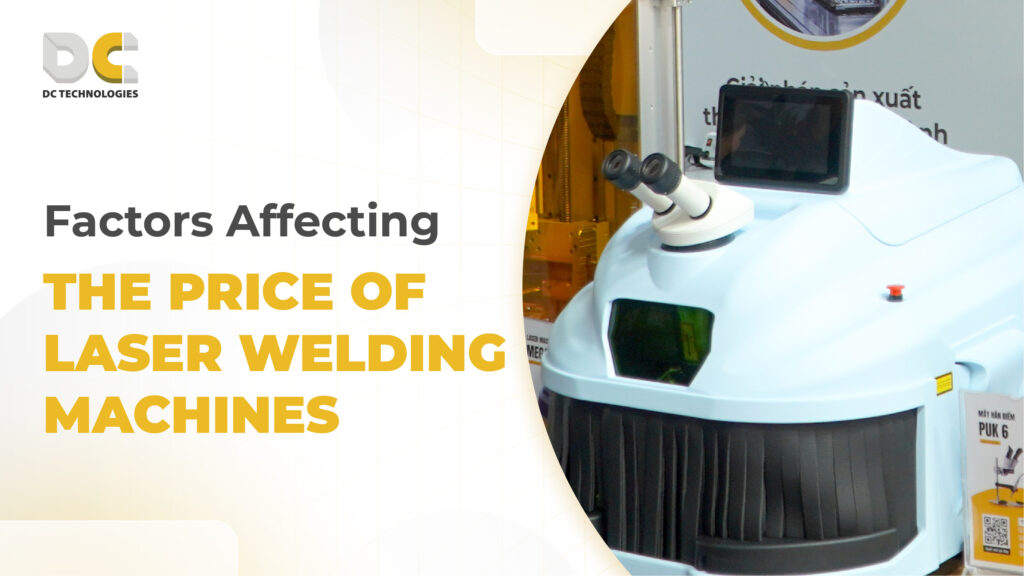
>> See more: Factors affecting the price of laser welding machines
>> See more: Applications of laser welding machines in jewelry making
>> See more: Safety guide on using laser welding machines for beginners
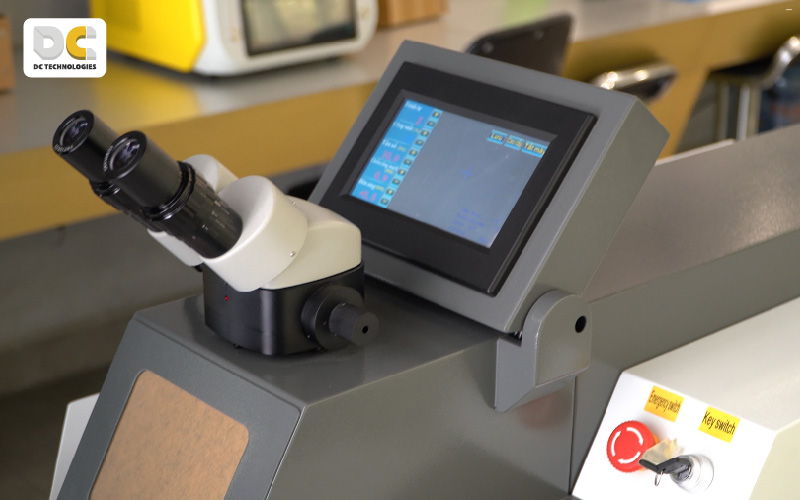
DC Technologies is a provider of genuine laser welding machines imported from Europe. Additionally, we boast a technical team with over 20 years of experience to advise on products suited to your business scale and needs, ensuring optimized production processes and enhanced product value.
Each type of machine has its own distinct advantages. Choosing the right product will enhance your brand value. If you are interested in laser welding machine pricing, please contact dc for support. We are confident in providing high-quality, authentic products.
Contact DC Technologies for a quote and consultation on the right laser welding machine for your business.
For further information, please contact us at:
Website: https://dctech.com.vn/
Hotline: 0901 958 318
Showroom: 87 Nghia Thuc, Ward An Dong, District 5, Ho Chi Minh city
High-Tech Center, 4th Floor, HUTECH Building, D1 Street, High-Tech Park, Tang Nhon Phu Ward, Ho Chi Minh City, Viet Nam.
22B Ơ2 Linh Dam Peninsula, Hoang Liet Ward, Hanoi City, Viet Nam
References: