Hotline: +84 902 588 891
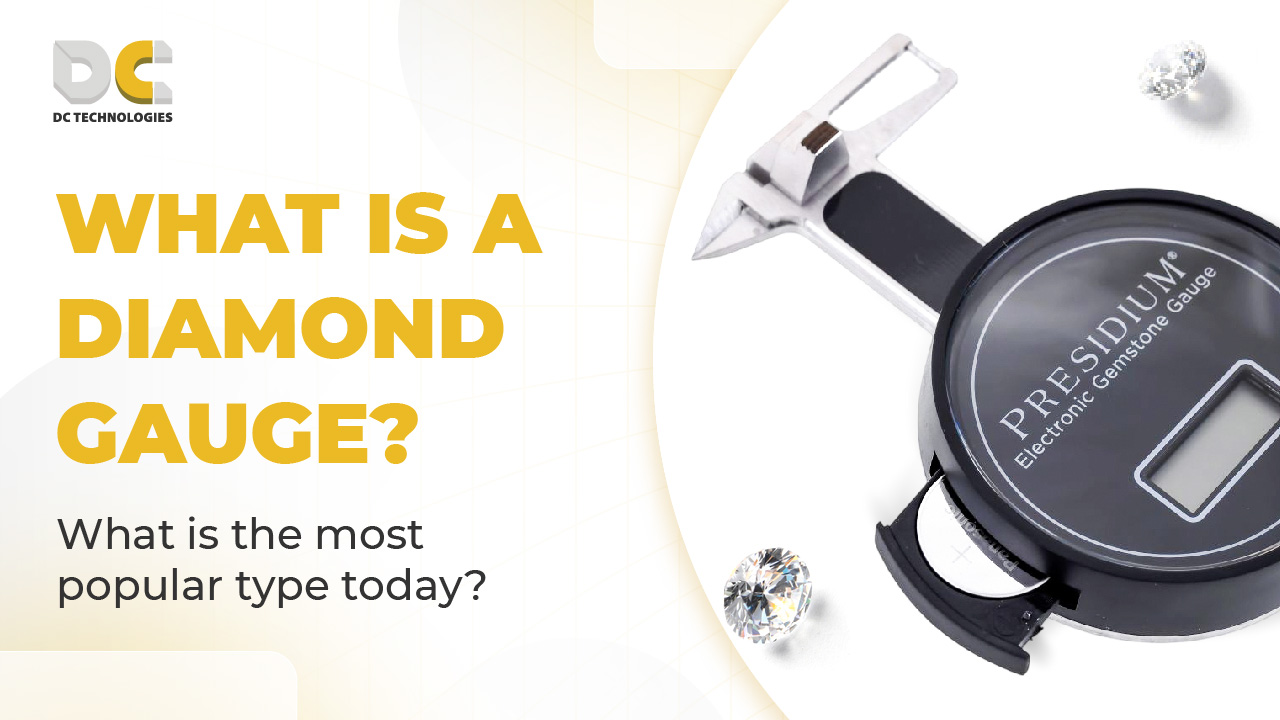
In the world of jewelry, where every millimeter can significantly alter a stone’s value, precision is essential. From classification and pricing to jewelry crafting, every process demands a high level of accuracy. To meet these strict requirements, electronic diamond measuring gauges were developed, helping jewelers, jewelry stores, and certification centers accurately measure even the smallest details of a gemstone. In this article, DC will give you a clearer understanding of diamond measuring gauges.
A diamond gauge is a specialized device used to measure the dimensions of diamonds and gemstones, such as diameter, height, width, depth, and other standard proportions. These are essential parameters for determining carat weight, classifying stones according to the 4C standards, and assessing the overall quality of the gemstone. With high accuracy and simple operation, the gauge is widely used in the jewelry industry.
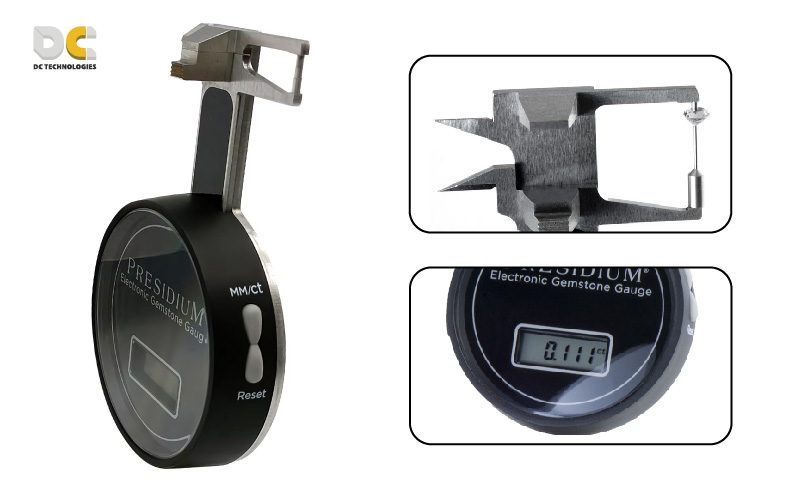
The structure of a diamond gauge is quite simple but finely tuned to ensure maximum accuracy. The device typically includes:
– Two measuring jaws used to hold and determine the stone’s dimensions
– A main body containing the sensor system or mechanical components
– A digital display and calibration button that resets the gauge to zero
Modern electronic gauges, such as those from Presidium, also use a 3V battery with a lifespan of thousands of hours, ensuring continuous and stable operation over long periods.
A diamond measuring device operates based on the mechanism of measuring the distance between two jaws through an electronic sensor. When the user places the stone between the clamps, the sensor detects the change in distance and converts it into a signal displayed on the screen in millimeters or carats. Thanks to this mechanism, the device can measure with an accuracy of up to 0.01 mm—an essential level of precision in the jewelry industry, where many small stones with high value require absolutely accurate measurement.
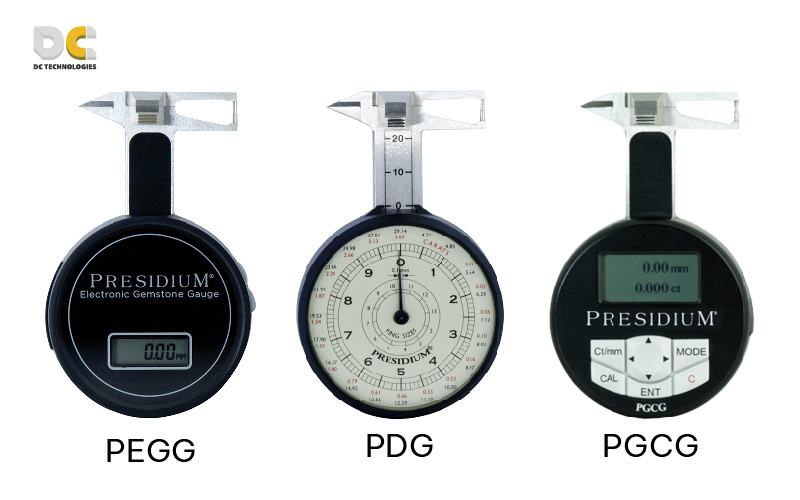
PEGG is a popular digital measuring gauge thanks to its extremely high accuracy and quick, efficient operation. Its compact design, sharp display, and smart auto-off feature make it an ideal choice for jewelers who require flexibility and high reliability during measurement.
PDG is suitable for those who prefer traditional, durable analog devices. With its stable measuring mechanism and the ability to display mm/carat/ring size simultaneously, PDG offers an easy-to-read, intuitive measuring experience that does not rely heavily on batteries.
PGCG is the most advanced version, integrating high-precision measurement, carat conversion for multiple cut types, and gemstone identification support. With USB connectivity and an intelligent auto-off function, it is an ideal device for gemologists, gemstone retailers, and laboratories.
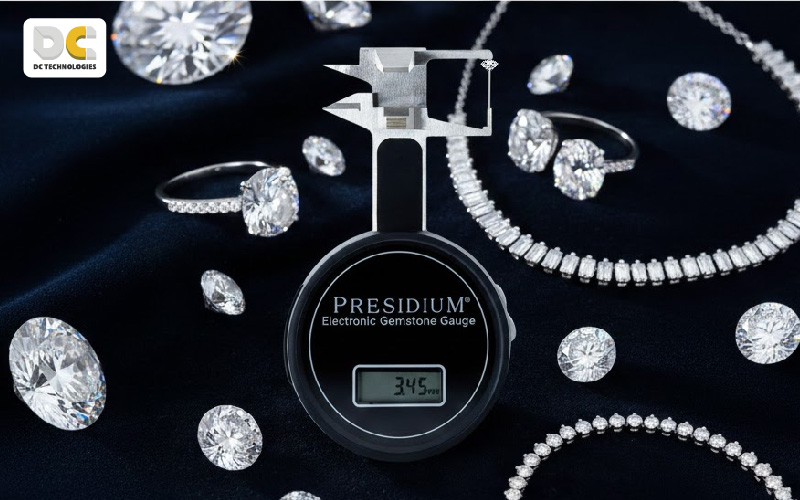
A diamond gauge is an essential tool in the jewelry industry, ensuring precision in every stage from grading and crafting to jewelry retail. It enhances the professionalism and efficiency of production, quality inspection, and customer consultation.
A diamond gauge helps determine the exact diameter, height, and proportions of a stone, ensuring that settings, ring mounts, and other jewelry components fit perfectly. This minimizes errors and ensures the final product meets design standards.
Based on the measured dimensions, the device allows jewelers and retailers to quickly estimate carat weight, which is especially useful when the stone is mounted and cannot be removed for weighing.
High-end models integrate density reference functions or gemstone identification capabilities, helping streamline preliminary grading with greater speed and accuracy.
The device enables staff to provide specific measurement data to customers, making consultations more professional and enhancing credibility in transactions.
DC Technologies is the official distributor of the leading brand Presidium in Vietnam, providing diamond gauges along with consulting services, technical guidance, and process control based on international standards.
Beyond supplying measuring instruments, DC also acts as a strategic partner helping businesses upgrade their jewelry inspection technology, optimize operational efficiency, and meet digitalization requirements in the global supply chain.
With an experienced team of specialists and a modern technical support system, DC is a trusted choice for businesses in the jewelry and gemstone industry.
It is evident that diamond gauges are not only tools for gem inspection but also key factors that enhance accuracy, quality and credibility throughout the entire jewelry manufacturing process. Owning internationally certified measuring devices helps businesses minimize errors, standardize processes and increase brand reputation.
Along this journey, DC Technologies – the official distributor of Presidium in Vietnam is a reliable choice for units in the jewelry industry. Not only providing genuine equipment, DC also supports technical consulting, process standardization and accompanies businesses in upgrading inspection technology.
DC is the bridge that helps businesses access international standards, optimize operations and keep up with digitalization trends in the global jewelry supply chain, creating sustainable competitive advantages in the future.
Reference: