Hotline: +84 902 588 891
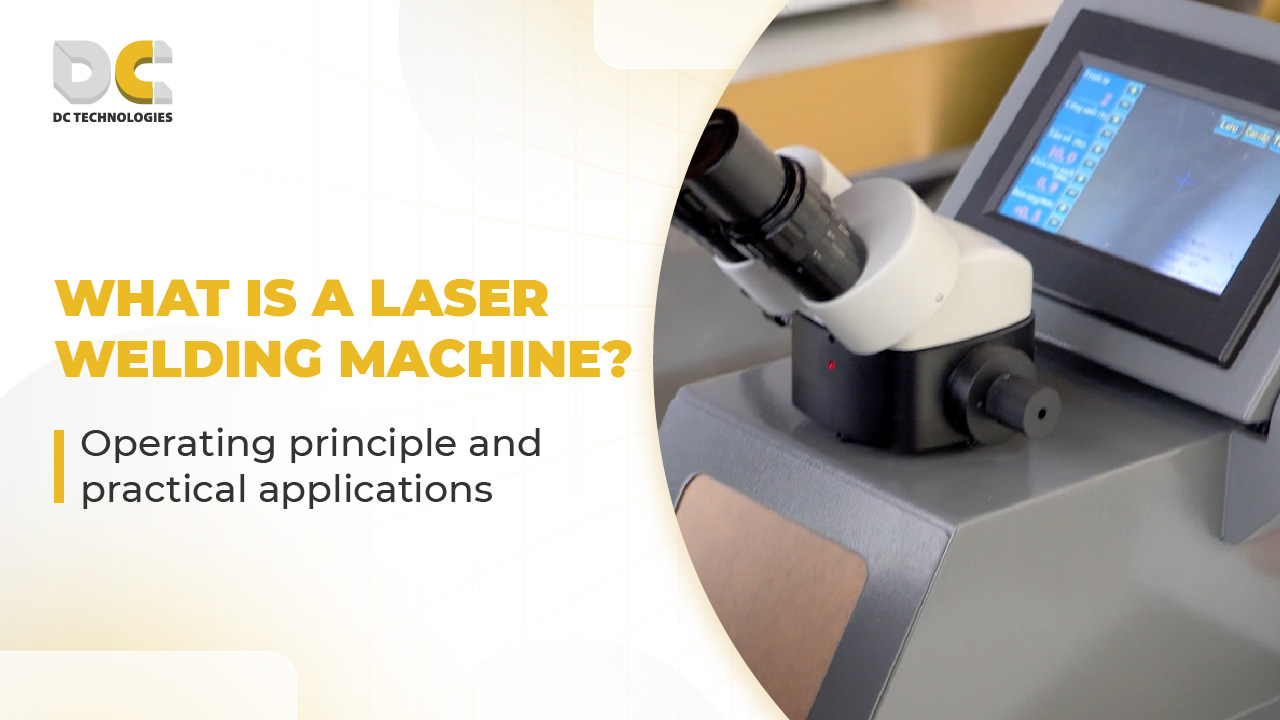
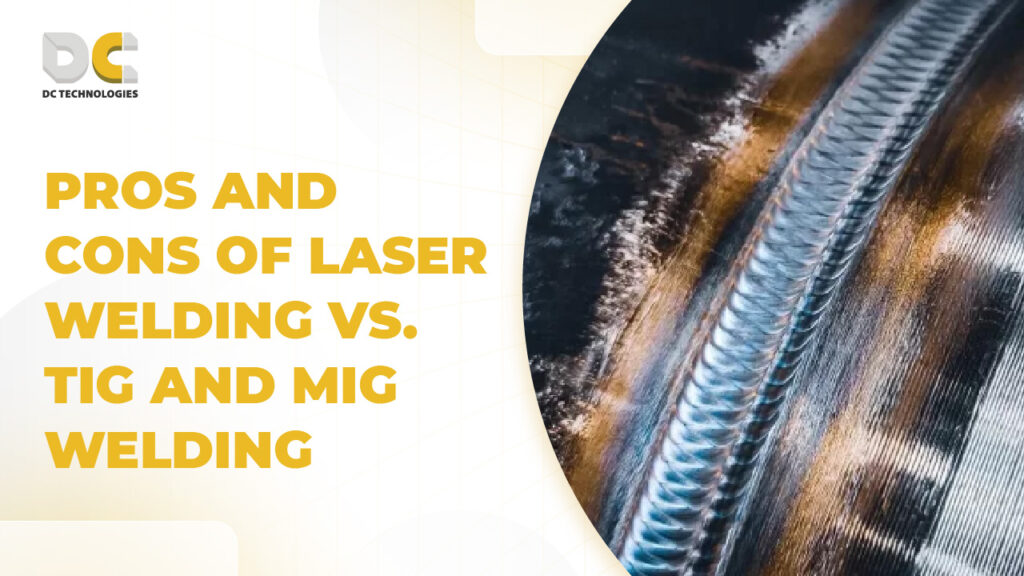
A laser welding machine is a specialized device that uses high-energy laser beams to produce precise, durable welds while minimizing material deformation. With its fast welding speed, high stability, and compatibility with various metals, laser welding technology is widely used in industries such as jewelry manufacturing, automotive, electronics, and medical devices. In this article, DC Technologies provides an in-depth explanation of what a laser welding machine is, how it works, and its key applications in modern industrial production.
Laser welding is a welding method that uses a high-intensity laser beam to melt and join materials together, typically metals or engineering plastics. Its key advantage lies in the highly concentrated energy of the laser, which produces precise, compact welds with significantly less distortion compared to conventional welding techniques.
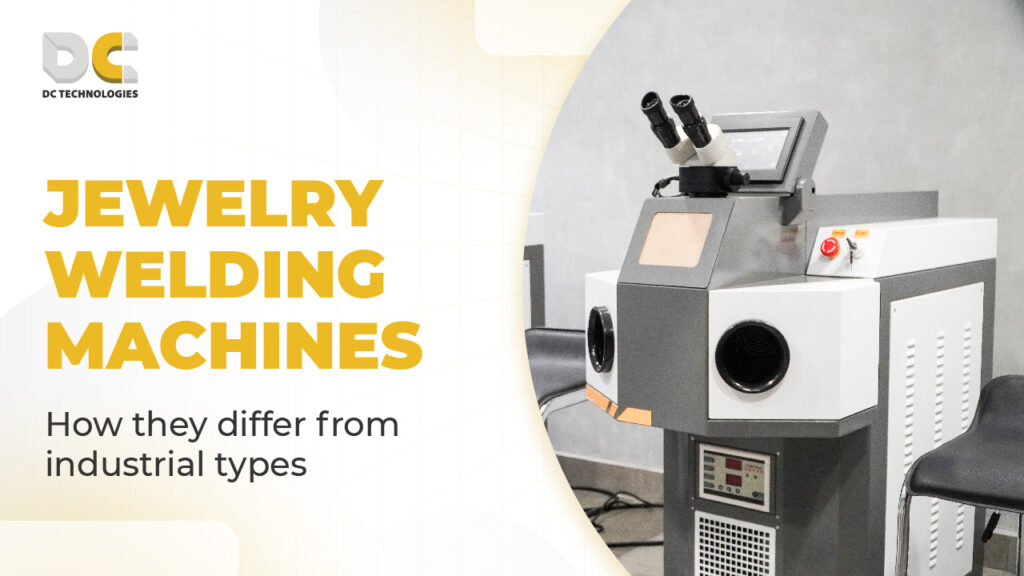
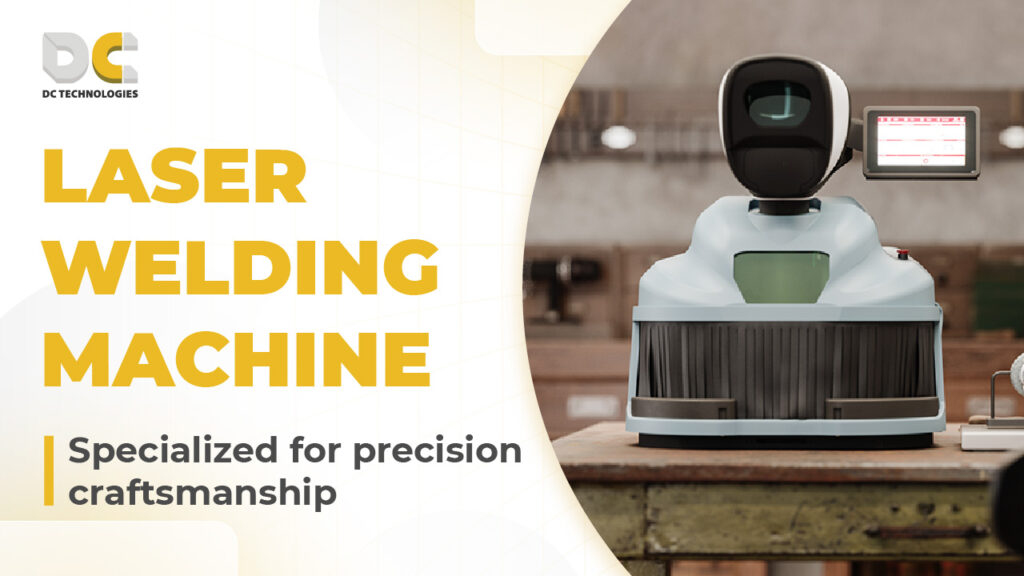
A laser welding machine is a device that uses a high-intensity laser beam to weld and join materials—primarily metals or engineering plastics. By concentrating energy into an extremely small area, the machine produces precise, clean, and highly durable welds. Key characteristics of a laser welding machine include:
– Focused laser beam: Enables welding of small, intricate, and precision components.
– High welding speed: Significantly reduces processing time compared to conventional welding methods.
– Minimal deformation: The small heat-affected zone (HAZ) helps prevent warping and material distortion.
– Wide applicability: Used in automotive manufacturing, electronics, machinery production, medical devices, and mold making.
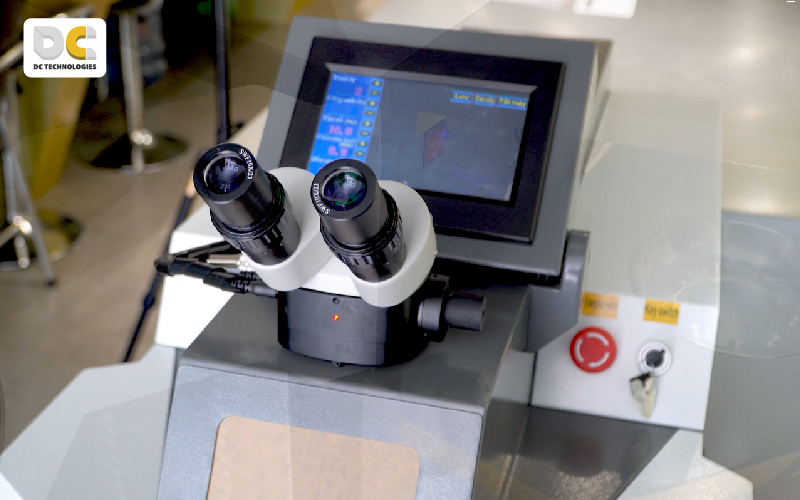
The structure of a laser welding machine typically includes the following core components:
The laser source generates the high-intensity laser beam used for welding. Common types include Fiber Laser, CO₂ Laser, and YAG Laser, selected based on the application and the materials to be welded.
This system delivers the laser beam from the source to the precise welding position. It consists of mirrors, optical fibers, and focusing lenses that concentrate the laser energy onto the weld area.
The welding head is the component where the laser beam is directed onto the material. Some welding heads are equipped with shielding gas nozzles to prevent oxidation, ensuring weld strength and surface quality.
The workpiece is positioned and moved using a worktable or an automated motion system. Depending on production requirements, this may be a fixed table, rotary table, or robotic system.
The control system regulates laser power, welding speed, and exposure time. It enables both automated welding programming and manual adjustments based on operational needs.
Laser welding machines require an efficient cooling system to prevent overheating of the laser source and welding head, ensuring stable operation and long equipment lifespan.
Laser welding technology operates based on the heat-generating principle of the laser source, which varies depending on the material type and its physical and chemical properties.
When a high-energy laser beam is focused on a specific point on a metal sheet, it produces a fine, precise, and high-speed weld. This method is particularly effective for thin materials, minimizing distortion in surrounding areas. The depth and shape of the weld are controlled through different welding techniques, ensuring optimal quality for each type of material.

Laser welding machines can employ various welding methods depending on material thickness, type, and technical requirements. Common methods include:
– Direct heating: Heat is directly conducted from the laser beam to the base material, melting the surface to form the weld.
– Energy transfer: An intermediate material is used to transfer heat from the laser source to the weld area, providing better weld control and enabling welding of complex joints.
– Conduction/penetration mechanism: The laser produces a weld deeper than conduction welding but shallower than full-penetration welding.
– Keyhole welding mechanism: The focused laser creates a small keyhole in the material; metal vapor rises to fill the cavity and bond the surfaces. This method produces deep, narrow, and strong welds, ideal for thick components or applications requiring high strength.
By utilizing these methods, laser welding machines achieve precise, durable welds and superior production efficiency. They are widely applied in industries such as automotive, electronics, medical devices, aerospace, and mold manufacturing.
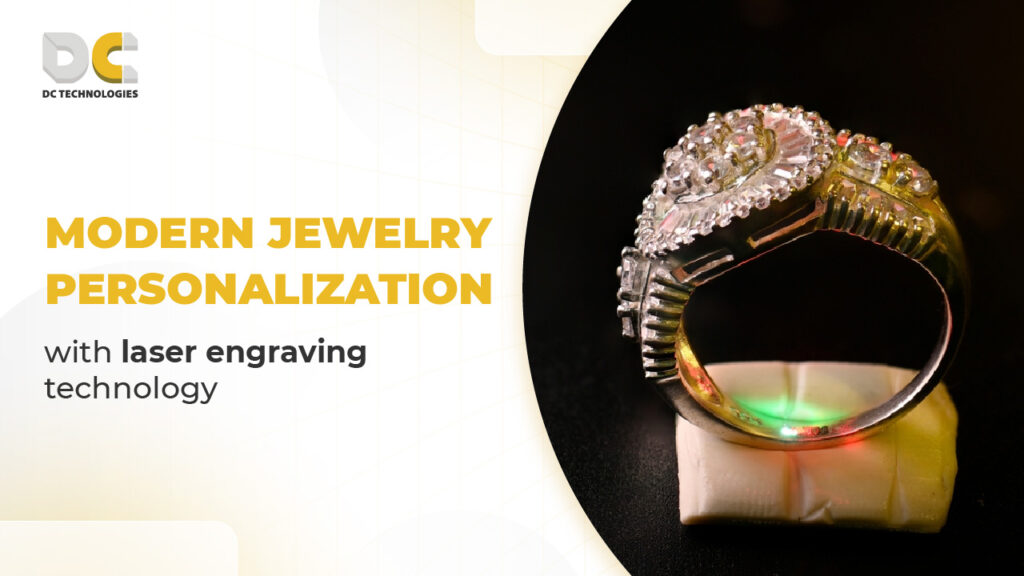
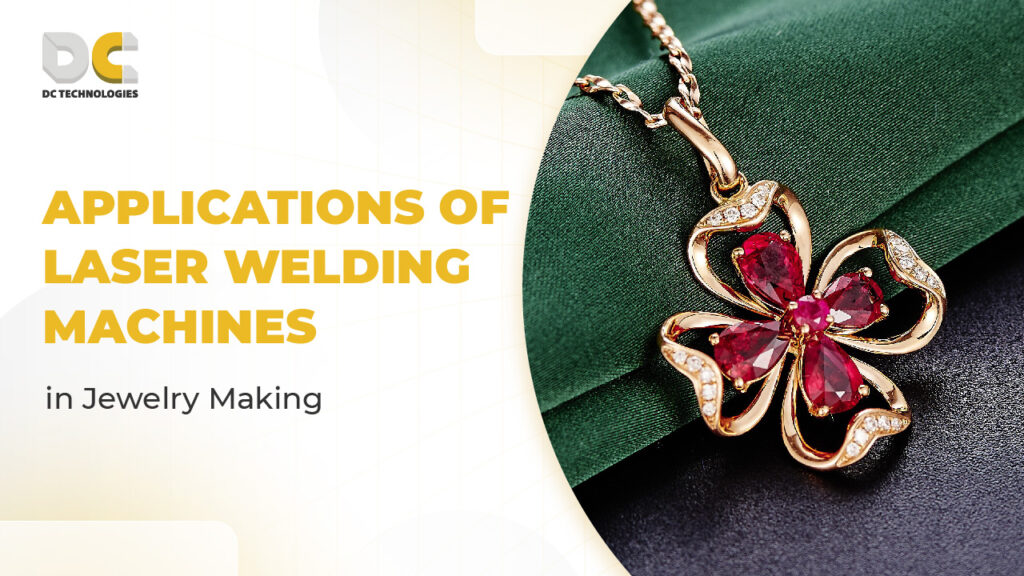
In the jewelry industry, laser welding machines are used to weld small, intricate components without causing distortion or damaging gemstone surfaces. Thanks to the focused laser beam, the welds are smooth, seamless, and highly aesthetic, making them ideal for gold, silver, and precious metal alloys. They support a wide range of metals, including gold, silver, platinum, palladium, and titanium, while often eliminating the need for post-processing due to precise control over laser power and exposure time.
In automotive manufacturing, laser welding machines enable precise and durable joining of metal components, ranging from vehicle frames and exhaust systems to engine parts.
Nd:Ce:YAG laser welding is particularly valuable for processing body panels and structural components, offering high speed, exceptional accuracy, and cost efficiency. This welding method accelerates production, minimizes material distortion, and ensures that vehicles meet stringent safety standards.
In the medical industry, laser welding machines are used to fabricate medical devices and surgical instruments from metals and specialized alloys. The Smooth Gaussian Spot technology has become a leading solution for both manufacturing and repairing medical equipment. With highly concentrated energy, a small weld spot (0.05–2 mm), and minimal heat-affected zones, welds achieve exceptional precision without deforming or altering material properties. Applications include:
– Surgical instrument welding: Scalpels, scissors, and forceps requiring smooth, strong, and durable welds that meet medical standards.
– Fabrication of metal medical devices: Support frames and medical machine components, benefiting from the ability to weld gold, titanium, and stainless steel without post-weld processing.
– Micro-component welding: Using microspot technology and precise power control, small welds on tubes, valves, and device connections achieve high repeatability and absolute safety.
Laser welding machines perform most effectively with high-quality, homogeneous materials. Metal components to be welded should consist of the correct alloy without impurities, allowing the laser beam to concentrate energy efficiently and produce strong, smooth, and aesthetically precise welds. Additionally, material quality directly affects the lifespan of both the welding head and the laser source.

Choosing a reputable laser welding machine supplier ensures you receive genuine equipment, reliable warranty services, and professional technical support.
DC Technologies is a trusted supplier of laser welding machines in Vietnam, fully meeting modern industrial standards. With years of experience in advanced technology equipment, DC Technologies proudly serves as a strategic partner to hundreds of businesses and production workshops nationwide.
DC Technologies offers a wide range of products, including DaDo DaDo 2.0, máy hàn Ms 3.5, Master 4.0, Mega 5.0, Mega 6.0, and many other laser welding machines.
Read more: Elettrolaser laser welding and engraving machines at DC Technologies.
In addition, DC’s team of highly skilled technicians is always ready to assist customers at every stage from product consultation and usage guidance to optimizing production efficiency. Their professionalism, transparency, and dedication make DC Technologies one of the leading laser welding machine suppliers in Vietnam.
Conclusion
Understanding the operating principles, technology, and welding methods allows businesses to optimize production, improve weld quality, and reduce costs. When selecting a laser welding machine, companies should consider both the quality of raw materials and the reliability of the supplier to ensure durable, safe, and high-performance equipment.
DC Technologies is a trusted provider in Vietnam, offering a wide range of modern laser welding machines supported by professional technical assistance. Their solutions cater to all production needs, from small workshops to large industrial factories.
Investing in genuine laser welding machines and suitable solutions enables businesses to elevate product quality, streamline processes, and maintain a sustainable competitive advantage in the era of Industry 4.0.
Learn more
https://dctech.com.vn/en/jmsblog-post?category_slug=tin_cong_nghe&post_id=392
https://dctech.com.vn/en/jmsblog-post?category_slug=chia_se_kinh_nghiem&post_id=566
https://dctech.com.vn/en/jmsblog-post?category_slug=chia_se_kinh_nghiem&post_id=606
https://dctech.com.vn/en/jmsblog-post?category_slug=chia_se_kinh_nghiem&post_id=601