Hotline: +84 902 588 891
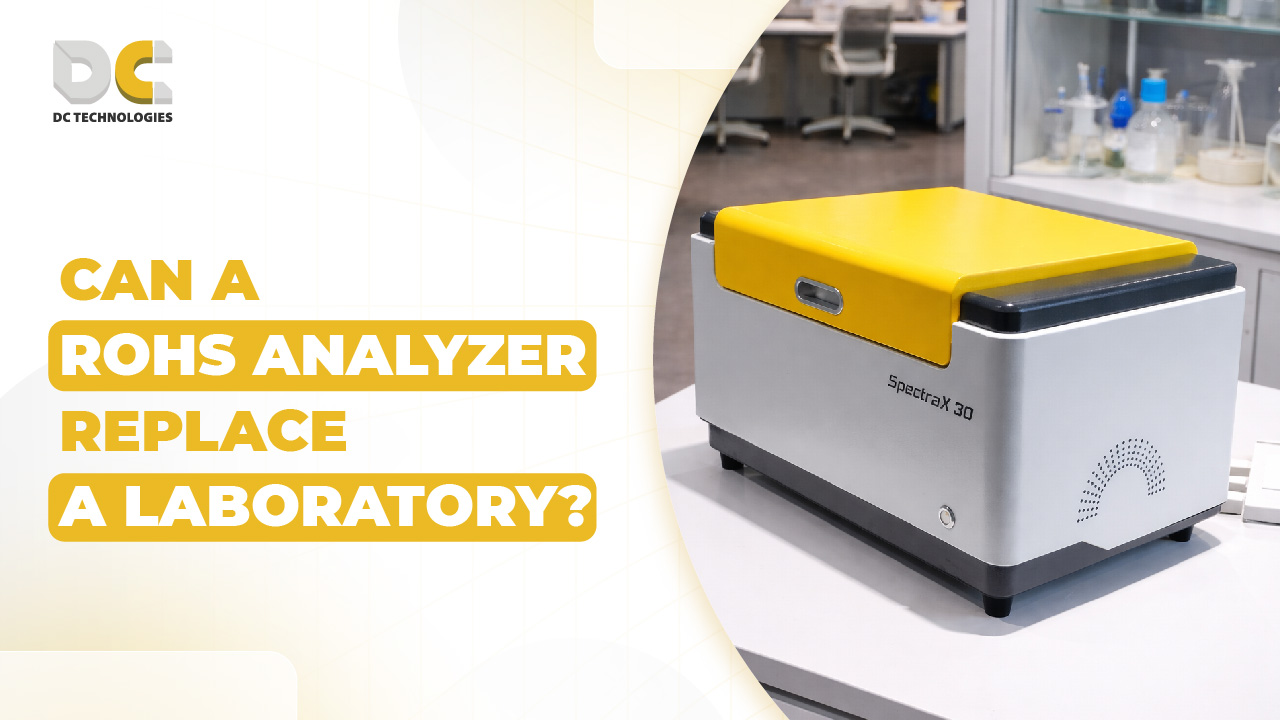
XRF RoHS analyzers are becoming a popular solution that helps businesses detect hazardous substances in materials in accordance with RoHS standards. However, can this equipment completely replace laboratory testing? This article from DC will help you better understand the role of RoHS analyzers and effective testing solutions for businesses.
RoHS (Restriction of Hazardous Substances) is a directive of the European Union (EU) that restricts the use of hazardous substances in electrical and electronic equipment. This regulation was introduced to minimize risks to human health and the environment, particularly during the manufacturing, use, and disposal of electronic waste.
The RoHS directive was first implemented in 2006 in the European market and has since become an important standard in the global supply chain. Many companies manufacturing electronic components, technological devices, and industrial materials must comply with RoHS to ensure their products are eligible for distribution in international markets.
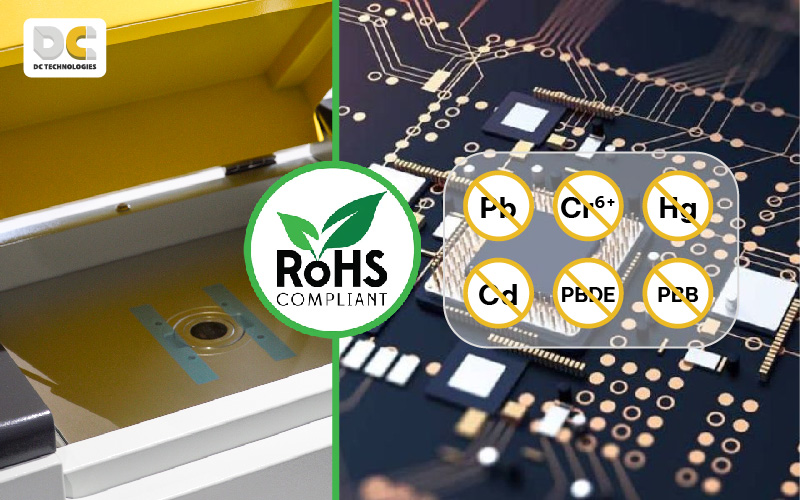
A RoHS analyzer is an analytical device used to test and detect hazardous elements in materials in order to determine whether a product complies with the RoHS Directive. This equipment is commonly used in industries such as electronics manufacturing, components, metals, and industrial materials to control the content of restricted substances according to European Union regulations.
>> Read more: What is a RoHS testing machine? Principles and applications
A RoHS analyzer helps businesses quickly examine the elemental composition of materials, such as lead (Pb), mercury (Hg), cadmium (Cd), or bromine (Br) before they are used in production or exported. These hazardous chemical substances are strictly limited to maximum allowable concentrations in electrical and electronic products.
| Substance | Symbol | Limit Level |
| Lead | Pb | < 1000 ppm (0.1%) |
| Mercury | Hg | < 100 ppm (0.01%) |
| Cadmium | Cd | < 100 ppm (0.01%) |
| Hexavalent Chromium | Cr6+ | < 1000 ppm (0.1%) |
| Polybrominated Biphenyls | PBB | < 1000 ppm (0.1%) |
| Polybrominated Diphenyl Ether | PBDE | < 1000 ppm (0.1%) |
| Bis(2-Ethylhexyl) phthalate | Phthalate | < 1000 ppm (0.1%) |
| Benzyl butyl phthalate | Phthalate | < 1000 ppm (0.1%) |
| Dibutyl phthalate | Phthalate | < 1000 ppm (0.1%) |
| Diisobutyl phthalate | Phthalate | < 1000 ppm (0.1%) |
Table: Restricted hazardous substances in electrical and electronic products
These limits help control the toxicity level of materials used in electronic devices, thereby reducing the risk of environmental pollution.
SpectraX 30 – an EDXRF analyzer optimized for the analysis of hazardous elemental composition in commercial products according to RoHS/WEEE/ELV/TCVN standards, effectively serving industries such as electronics, consumer goods, toys, and jewelry.
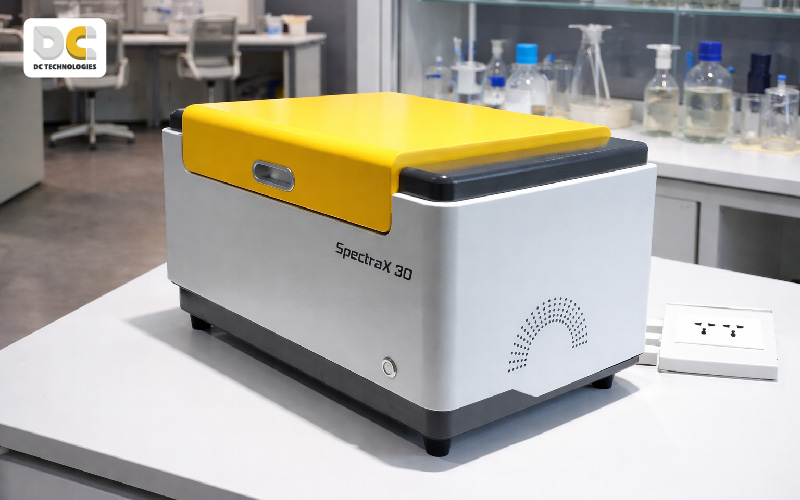
>> Contact for a quote: XRF Machine – SpectraX 30
| Specification | Details |
| Detector | Amptek, Si-PIN 145eV ± 5eV, Be window |
| X-ray tube | Max 50kV / Max 1mA (optimum set at 47kV / 0.8mA), W target |
| High voltage | Spellman |
| Collimator | 0.2, 0.5, 1.0, 2.0, 3.0, 4.0, 6.0, 8.0 mm |
| Filter | Mo0.06/Al0.3, Cu0.1, Al0.3, Al0.6, Mo0.1/Al0.3, Cu0.15 (mm) |
| X-ray incidence angle | 45° |
| External dimensions (W×D×H) | 585 × 465 × 375 mm |
| Sample chamber (W×D×H) | 387 × 290 × 150 mm |
| Weight | 45 kg |
| Analysis software (main) | FP qualitative and quantitative analysis software (optional) |
| Software | Specialized RoHS analysis software |
Table: Technical specifications of the SpectraX 30 RoHS analyzer
SpectraX 30 is particularly effective in analyzing six hazardous elements (Cd, Pb, Hg, Br, Cr, Cl) as well as As and S according to RoHS/WEEE/ELV/EN71 directives and other environmental protection standards such as Circular 30/2011/TT-BCT, Decision 4693/QĐ-BCT, and Vietnamese Standard TCVN 10065:2013 on safety requirements for children’s jewelry, which regulates Cd, Pd, Hg, and Cr content in children’s jewelry.
It also complies with National Standard TCVN 12000:2018 (ASTM F2617-15) for polymer materials, which specifies the qualitative and quantitative determination of chromium, bromine, cadmium, mercury, and lead using energy-dispersive X-ray fluorescence spectroscopy (EDXRF).
Modern RoHS analysis instruments use XRF technology to rapidly detect heavy metal elements in materials. Within just a few seconds, businesses can determine whether a material or component is at risk of not meeting RoHS compliance requirements.
Compared with sending samples to a laboratory for analysis, SpectraX 30 offers many practical benefits for businesses:
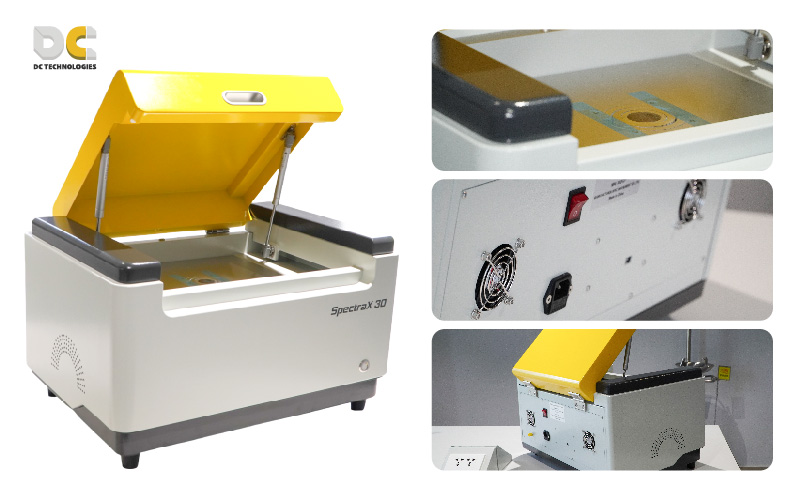
Thanks to its rapid analysis capability and non-destructive testing method, XRF RoHS analyzers are becoming standard equipment in many electronics and industrial manufacturing factories.
DC Technologies JSC specializes in providing advanced technology solutions, jewelry-making tools, machinery, equipment, and high-quality materials for various industries in Vietnam.
As the exclusive distributor of the SpectraX 30 RoHS analyzer, DC New Technology not only supplies genuine equipment but also offers consulting, installation, operational training, and in-depth technical support, helping businesses maximize the effectiveness of the device in testing and quality control processes.
Controlling hazardous substances in accordance with RoHS standards has become an important requirement for many manufacturing and exporting businesses. XRF-based RoHS analyzers provide a fast, non-destructive, and cost-effective analysis solution, enabling companies to proactively test materials directly on site. With rapid analysis capability and high accuracy, RoHS analyzers are becoming effective supporting tools for many businesses in the electronics, materials, and industrial manufacturing sectors. Investing in the right equipment not only helps optimize testing processes but also ensures that products comply with international standards and enhances brand credibility in the global market.
Fanpage: https://www.facebook.com/dctech.com.vn
Hotline: +84 908 727 235
Showroom: 87 Nghia Thuc Street, An Dong Ward, Ho Chi Minh City, Viet Nam.
High-Tech Center: 4th Floor, HUTECH Building, D1 Street, Saigon Hi-Tech Park, Tang Nhon Phu Ward, Ho Chi Minh City, Viet Nam.
Northern Office: 22B Ơ2 Linh Dam Peninsula, Hoang Liet Ward, Hanoi, Vietnam